
On this page
Quick answer
A blast freezer rapidly pulls product from +30°C to −18°C or lower (down to −40°C) in 6–24 hours, while a cold storage holds product at a steady 0–4°C (chiller) or −18°C (freezer). Most meat, seafood and ready-meal businesses need both: the blast freezer as the process step, sized at 5–10% of holding capacity.
Key takeaways
- Blast freezers cost 2.5–3.5× more per cubic metre than cold storage because they need 2–4 TR per m³, against 0.3–0.5 TR for a holding freezer.
- Blast freezing forms micro ice crystals that do not rupture cells, which makes it mandatory for meat, poultry, seafood, ready meals and ice cream hardening.
- Indicative 2026 capex per MT per batch is ₹2.8–4.2 lakh for air blast, ₹4.5–7 lakh for plate and ₹6–11 lakh for an IQF tunnel.
- IQF costs 1.5–2× conventional blast but has a lower operating cost per kg above 2 MT per hour throughput.
- A 100 MT/month export-grade meat plant typically pairs a 5–10 MT/batch blast freezer with a 200–300 MT holding cold storage.
Function Difference
Cold storage holds product at a steady set temperature — typically 0–4°C for chillers or −18°C for freezers. It is a holding facility.
Blast freezer rapidly drops product temperature from +30°C to −18°C (or lower, down to −40°C) in 6–24 hours, then transfers the now-frozen product to the holding freezer. It is a process facility.
Most commercial meat/seafood/ready-meal operations need both — read our freezer room and meat & seafood solutions pages for combo facility layouts.
When Blast Is Mandatory
Cellular structure preservation drives the spec. Slow freezing forms large ice crystals that rupture cells. Blast freezing forms micro-crystals that don't.
Mandatory for:
- Meat (mutton, chicken, beef)
- Poultry (whole and cut)
- Seafood (especially shrimp, prawn — IQF or blast)
- Prepared meals and ready-to-eat
- Ice cream (hardening tunnel = blast)
- Bakery products for export
Optional for:
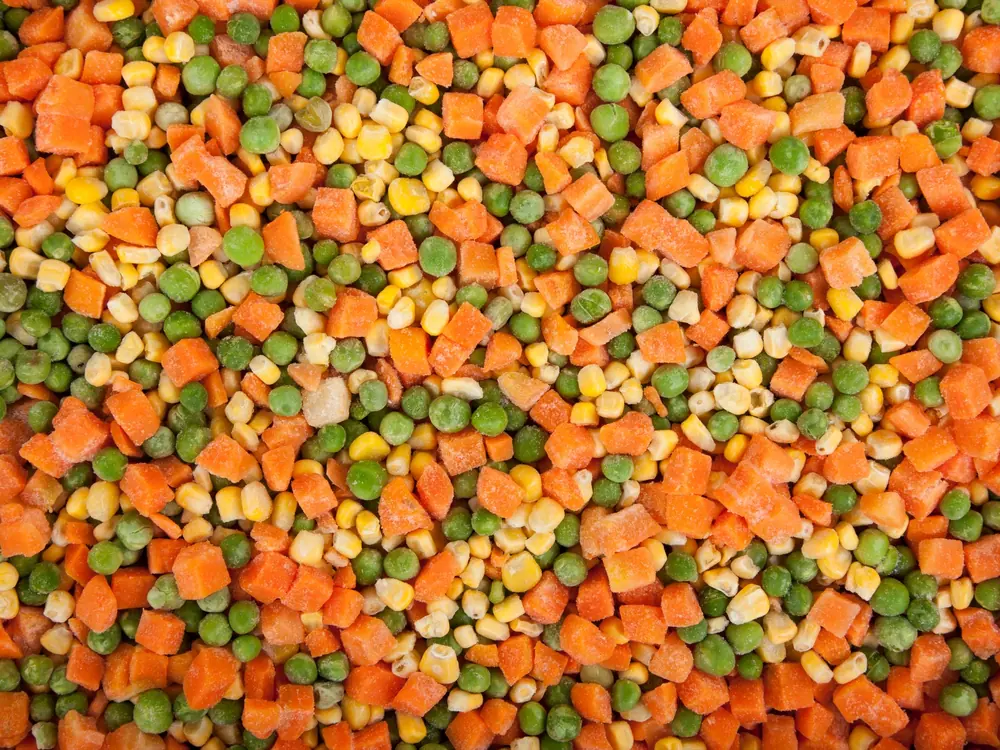
- Bulk vegetables (peas, beans, mixed veg) — blast preferred if exporting
- Dairy products like paneer, cheese (depends on market)
Capex Multiplier
Blast freezers cost 2.5–3.5x per cubic metre vs. cold storage due to:
- Oversized refrigeration (2–4 TR per cubic metre vs 0.3 TR for holding)
- Heavier 150mm PUF or PIR insulation
- High-velocity evaporator fans (4–8 m/s air velocity)
- Reinforced civil for heavier equipment
- Often ammonia refrigeration above 5 TR (read ammonia vs Freon)
Indicative 2026 capex per MT-per-batch:
| Blast type | Capex per MT/batch |
|---|---|
| Air blast | ₹2.8–4.2 lakh |
| Plate blast | ₹4.5–7 lakh |
| IQF (tunnel) | ₹6–11 lakh |
| Cryogenic (LN2) | ₹9–16 lakh |
Combo Facility Layout
Standard meat/seafood operation:
receiving → cutting/processing → blast freezer (5–10% of holding capacity)
             ↓
         holding freezer (−18°C, sized to throughput)
             ↓
         dispatch via insulated dock
For a 100 MT/month export-grade meat plant, you typically need a 5–10 MT/batch blast freezer feeding a 200–300 MT cold storage. Sizing is throughput-driven, not stock-driven.
IQF vs Conventional Blast
Individual Quick Freezing (IQF) is a continuous-tunnel variant of blast freezing — product moves on a conveyor through −30 to −40°C high-velocity air or fluid bed. Used for:
- Peas, beans, sweet corn, mixed vegetables (export-grade)
- Shrimp, prawn, fish portions
- Berries and fruit pieces
IQF capex is 1.5–2x of conventional blast but operating cost per kg is lower at scale (>2 MT/hour throughput).
Where Blast Freezers Make Money in India
- Export meat plants in Andhra-Telangana corridor (closest aligned)
- Seafood processing in Gujarat coastal belt
- Fish processing in Kerala (we serve via Maharashtra partners)
- Ready-meal kitchens in Delhi NCR
- Pea and corn processing in Punjab and Haryana
FAQ
Frequently asked questions
Can a freezer room work as a blast freezer?
No. A holding freezer is sized for 0.3–0.5 TR per cubic metre. Blast needs 2–4 TR per cubic metre and 4–8 m/s air velocity. Wrong tool for the job.
Is IQF better than air blast?
For free-flowing products (peas, shrimp, berries) at high throughput — yes. For bulk meat carcasses — no, conventional blast or plate freezer is more economical.
Do I need ammonia for blast?
Above 50 TR (large export plant) — yes, ammonia is more efficient and meets export-buyer expectations. Below 50 TR — R32 or R449A is sufficient.
Written by
HyperCold Engineering Team
Cold room and cold storage engineers at HyperCold™, a Daikin equipment partner founded in 2020 and headquartered in Sirsaganj, Firozabad (UP). We design, manufacture PUF panels for, install and maintain cold rooms across India.