
On this page
- 01What should you check first when a cold room is not cooling?
- 02Cold room troubleshooting table: symptom, cause, check and fix
- 03Why is there ice on the evaporator coil, and how do you clear it?
- 04Why does the compressor trip or short-cycle in summer?
- 05What can an operator check safely, and what needs a technician?
- 06How do voltage and power problems damage a cold room?
- 07What maintenance schedule prevents most breakdowns?
- FAQFrequently asked questions
Quick answer
A cold room that is not cooling usually has one of five problems: a dirty or blocked condenser, an iced evaporator from failed defrost, a door or gasket leak, low refrigerant from a leak, or a power fault such as low voltage or single phasing. Operators can safely check the first three; refrigerant and electrical faults need a technician.
Key takeaways
- Dirty condenser coils are a leading cause of compressor failure in Indian summers; brush-clean them monthly and pressure-wash quarterly.
- A compressor that short-cycles with runs under 10 minutes points to low charge, a dirty condenser or an oversized unit.
- Never chip ice off an evaporator with a tool; one punctured tube means a refrigerant leak and a stopped room.
- Room temperature drifting more than 2 °C from set-point needs a service visit: door gaskets, stuck defrost, fan failure or a leak are the usual causes.
- Rural supplies can swing ±15%, so a servo stabiliser, phase-failure relay and surge protection prevent most nuisance trips and burnouts.
What should you check first when a cold room is not cooling?
Work through these in order before calling for service; none needs tools or an open panel:
- Controller: is it powered, is the set-point right, and is there an alarm code? Note the code for the technician.
- Defrost: is the room simply in a defrost cycle? Let it finish, including drip time, before judging.
- Door: does it close flush and latch? Is the gasket torn, iced or dirty, and is the strip curtain intact?
- Evaporator: are the fans turning, and is the coil face white with ice?
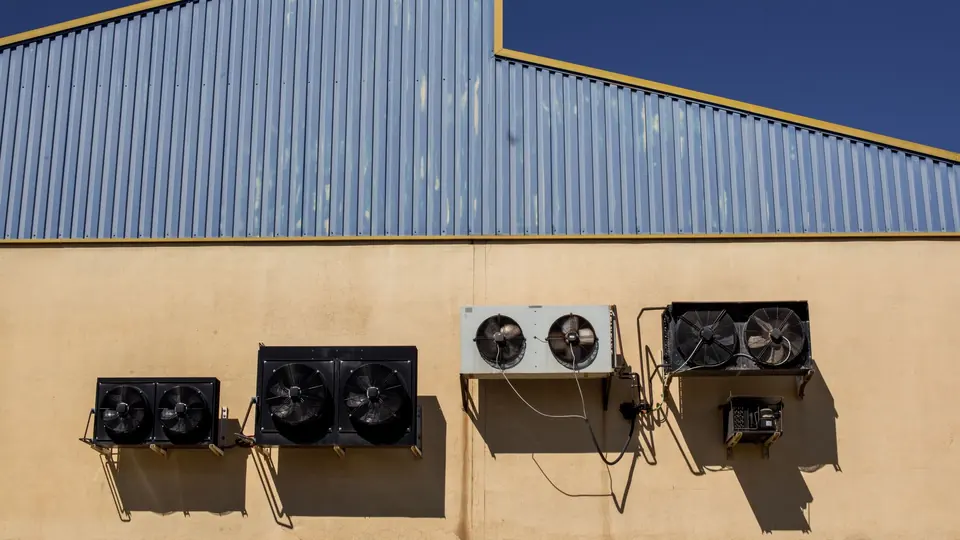
- Condensing unit: is its fan running, is the coil face clogged with dust or leaves, and is hot air recirculating?
- Load: was a large warm batch just loaded, or are stacks blocking the evaporator's air throw?
- Power: has an MCB tripped? Reset it once only; if it trips again, stop and call a technician.
Cold room troubleshooting table: symptom, cause, check and fix
| Symptom | Likely causes | Operator check | Fix and who |
|---|---|---|---|
| Not cooling, temperature high | Dirty condenser, iced coil, door leak, low refrigerant, compressor or contactor fault | Alarm code, fans running, condenser face, door seal | Clean condenser, fix door (operator); leak, charge, compressor (technician) |
| Short cycling | Low charge, dirty condenser, oversized unit, faulty pressure switch or sensor | Time the runs; under 10 minutes is a red flag | Technician: leak test, charge, switch and controller settings |
| Ice on evaporator coil | Defrost heater, sensor or timer fault, door left open, fan failure, low charge | Frost pattern: whole coil or inlet only | Manual defrost (operator); heater, sensor, charge (technician) |
| Water leaking into room | Blocked or frozen drain, failed drain heater, cracked tray, unit not level | Water under the evaporator; drain outlet dripping outside | Clear drain and level unit (technician if heater) |
| High head pressure or HP trip in summer | Dirty condenser, blocked airflow, hot-air recirculation, fan fault, overcharge, air in system | Clearance and cleanliness, fan turning | Clean and clear (operator); fan, charge, purge (technician) |
| Frost on door frame | Damaged gasket, door not closing flush, failed heater frame, iced relief port | Paper test on gasket; feel frame for cold spots | Adjust hinges, replace gasket; heater (technician) |
| High humidity, wet walls | Frequent openings, warm wet product, floor washing, oversized unit short-cycling | Door log, product temperature at loading | Door discipline, strip curtain, pre-cool product, reset controls |
| Noisy fans | Ice on blades or guard, worn bearing, loose blade, debris | With power isolated, look for ice or debris | Defrost and clean; motor or bearing (technician) |
| Frequent tripping | Low or high voltage, single phasing, loose terminals, undersized cable, compressor fault | Which device trips and when | Stabiliser, phase relay, terminal and cable checks (electrician or technician) |
Why is there ice on the evaporator coil, and how do you clear it?
Read the frost pattern first:
- Whole coil white and solid: defrost is not working (heater, termination sensor or timer setting) or the fans have stopped. Also look for a door left ajar or a torn strip curtain letting humid air in.
- Frost only on the first rows or the suction pipe: usually low refrigerant or an expansion-valve fault. Ice on the suction line at the compressor means liquid floodback, so switch off and call a technician before the compressor is damaged.
- Ice building in the drip tray: the drain line is blocked or its heater has failed, so meltwater refreezes.
To clear it, start a manual defrost from the controller or, in a chiller, switch the refrigeration off and let the fans run. Never chip ice with a knife, screwdriver or hammer: fins and copper tubes are thin, and a puncture means a refrigerant leak. Then find the cause, or the coil will ice again within days.
Why does the compressor trip or short-cycle in summer?
Summer faults cluster on the high-pressure side. When a 45 °C afternoon meets a dusty condenser, condensing pressure rises until the high-pressure switch trips; the unit restarts after its delay, trips again, and the room slowly warms.
Check in this order:
- Condenser coil clean on the air-inlet face; dust, cotton fluff and leaves build up fast near fields and mandis
- Condenser fan running at full speed with blades intact
- Nothing blocking the discharge, and no hot air recirculating from a wall, sheet or neighbouring unit
- Unit not boxed in; HyperCold's guidance is that a poorly ventilated location can cut capacity by up to 30%
Short cycling with runs under 10 minutes has different causes: low refrigerant charge, a dirty condenser or a machine oversized for the current load. A technician confirms with gauges; overcharge and air in the circuit also raise head pressure and are not operator fixes. How each part works is explained in refrigeration system components.
What can an operator check safely, and what needs a technician?
| Operator can safely | Refrigeration technician or electrician only |
|---|---|
| Read the controller, alarms and temperature log | Fit gauges, check or add refrigerant, leak test |
| Start a manual defrost from the controller | Replace defrost heaters, sensors and fan motors |
| Check the door closes; clean and paper-test gaskets | Repair heater wires, frames and relief ports |
| Keep stacks clear of the evaporator air throw | Change controller parameters and safety settings |
| Brush dust off the condenser face with power isolated | Open the electrical panel, tighten terminals, change contactors |
| Clear leaves and covers away from the condensing unit | Braze, change the filter-drier, service the compressor |
| Reset a tripped MCB once | Diagnose repeated trips and voltage or phase faults |
Refrigerant work needs trained, equipped technicians, and do-it-yourself repairs can void the equipment warranty. HyperCold provides breakdown and preventive service under its cold room AMC, for rooms it built and, after an engineering audit, rooms built by others.
How do voltage and power problems damage a cold room?
Rural feeders in India can swing by about ±15%. Low voltage makes a compressor draw more current and run hot until it trips on overload or burns out; single phasing and phase reversal are just as damaging for three-phase units.
Typical protection:
- A servo voltage stabiliser sized for the refrigeration load where the supply is unstable
- A phase-failure and phase-sequence relay with under- and over-voltage cut-out
- Surge protection; HyperCold's AMC guide lists compressor burnout from a voltage spike as excluded unless surge protection is installed
- A restart delay after power returns or after DG changeover, so compressors do not all start at once into high pressure
- Tight terminals and correctly sized cable, checked during maintenance visits
Plan these at installation; the electrical readiness checklist is in floor insulation and site preparation.
What maintenance schedule prevents most breakdowns?
| Frequency | Who | Key tasks |
|---|---|---|
| Daily | Operator | Log temperature and humidity, check alarms, listen for unusual noise, check door seal and floor for ice or water |
| Weekly | Operator | Wash door gaskets, clear ice from the threshold, check the evaporator drain, verify the data logger |
| Monthly | Technician | Brush-clean the condenser, check charge at the sight glass, test HP/LP cut-outs, inspect the panel, test DG auto-start |
| Quarterly | Technician | Pressure-wash the condenser, straighten fins, test defrost, calibrate the thermostat, flush the drain |
| Annual | Engineer | Oil check or change, filter-drier, weigh refrigerant and leak test, megger motors, temperature mapping |
The full checklist is in the cold room maintenance guide; for what an AMC should include and cost, read cold storage AMC in India.
FAQ
Frequently asked questions
Why is my cold room running but not reaching set-point?
The system is short of capacity: typical causes are a dirty condenser on a hot day, partial coil icing, a door leak, a warm batch beyond design intake or slow refrigerant loss. A room that recovers overnight but drifts every afternoon points to the condenser.
How long can a cold room hold temperature during a power cut?
A well-insulated room with 100 mm or thicker PUF, cam-lock joints and sealed doors can hold temperature for 4–8 hours depending on size, load and ambient; a poorly insulated room can lose it in under 2 hours. Keep the door shut until power returns.
Is some frost on the evaporator normal?
Yes. A light, even frost between defrosts is normal in rooms below about +2 °C, and the coil should be clear after each defrost. Thick ice, or frost that survives a defrost, is a fault.
Why does water drip from the evaporator after defrost?
Usually the fan delay after defrost is too short, so the fans blow meltwater off the coil, or the unit is not level and water misses the tray. A technician can reset the drip and fan-delay times.
How often should the condenser be cleaned in dusty areas?
Brush the coil face lightly every week in dusty harvest and summer months, with monthly technician cleaning and a quarterly pressure wash. Dirty condensers are among the most avoidable causes of summer breakdowns.
Written by
HyperCold Engineering Team
Cold room and cold storage engineers at HyperCold™, a Daikin equipment partner founded in 2020 and headquartered in Sirsaganj, Firozabad (UP). We design, manufacture PUF panels for, install and maintain cold rooms across India.